Do You Tip in Austria? A Simple Guide for Cafés, Restaurants, and Taxis
So, do you tip in Austria?
At some point, almost everyone asks this question. Usually quietly. Usually at the worst possible moment. The bill is already on the table, the waiter is standing nearby, and the numbers do not feel round enough to be comfortable. €4.60 for a coffee. €18.20 for a taxi. €47.30 for dinner. And suddenly, a simple payment turns into a social puzzle.
Tipping in Austria is not complicated, but it is very specific. It follows its own logic, one that is rarely written down and almost never explained directly. Instead, people learn it by watching locals, by listening carefully, and by making a few small mistakes along the way.
How Tipping Actually Works in Austria
Yes, people tip in Austria. But not loudly. And not dramatically.
The most important thing to understand is this: tipping in Austria is not mandatory. Service staff are paid a proper wage, and tips are not expected to replace it. Because of that, tipping is seen as a sign of appreciation, not an obligation. It is a personal response to good service, not a social rule that must be followed at all costs.
Coffee Culture and Small Change
The clearest example is coffee culture, which in Austria is almost sacred. You sit down, order a cappuccino, maybe take your time. When the bill arrives, it might say €4.60. If the service was fine, the usual reaction is to round up. You pay €5 and say something like “It’s okay,” or “The rest is for you.” Many locals use the phrase “Passt scho,” which loosely translates to “That’s fine” or “All good.” It is casual, friendly, and immediately understood.
Many locals use the phrase “Passt scho,” which loosely translates to “That’s fine” or “All good.” It is casual, friendly, and immediately understood. No explanations needed.
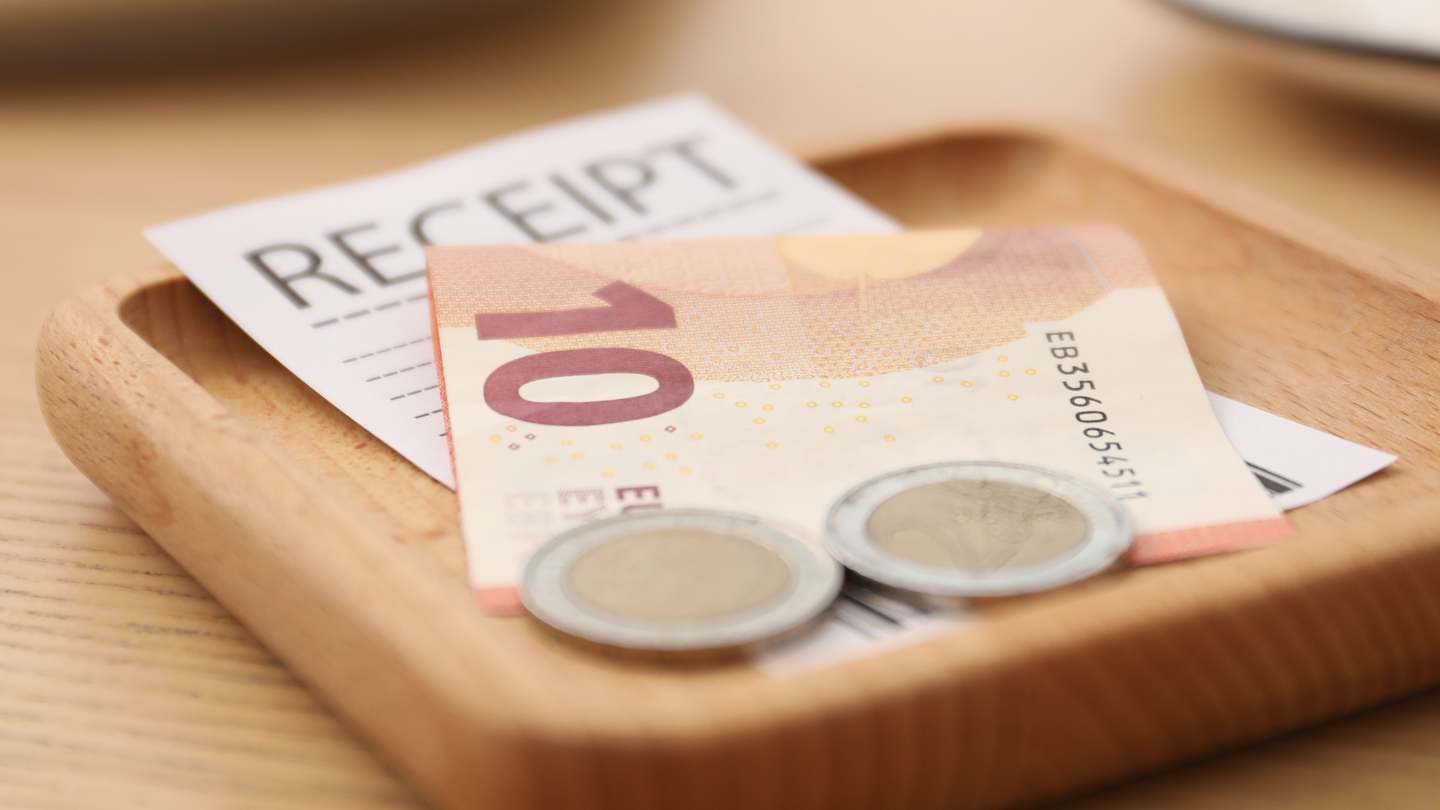
If you pay with a larger note, the process becomes verbal. Instead of waiting for the change and leaving coins on the table, you say the amount you want to pay. If the bill is €7 and you hand over €10, you might simply say “Eight” or “Nine.” The waiter gives you back the rest. The tip is clear, direct, and unspoken beyond that single word.
Restaurants Without Percentages
Restaurants follow the same rhythm, just on a slightly bigger scale. There is no strict percentage system, and no one expects you to calculate anything precisely. Most people simply round up the bill to a clean number. A €23 bill becomes €25. A €47 bill becomes €50.
If the service was genuinely very good, a tip of around five to ten percent is considered generous. But it is always optional. Paying the exact amount is not seen as rude, especially if the service was average.
What matters more than the amount is the interaction. Eye contact. A calm voice. A clear final number. Tipping happens at the moment of payment, not after. It is not left on the table. It is handed over directly, followed by a short “thank you,” and then everyone moves on.
Bars: Keep It Simple
Bars are even simpler. You round up. A drink costs €4.80, you pay €5. No discussion, no explanation.
In busy bars, tips are often given at the end of the evening, or not at all. Both are completely normal. The system is informal, and no one keeps score.
Taxis and Getting Around
Taxi drivers fall into the same category. Tipping is appreciated, but not required. Most people simply round up the fare. A €18.20 ride becomes €20.
If the driver helped with luggage, waited patiently, or went out of their way, adding a little extra is a polite gesture. But no one will expect it, especially for short trips.
Tour Guides and Experiences
Tour guides are one of the few cases where tipping is more clearly expected, though still not mandatory. For walking tours, €1–2 per person is common. For longer or private tours, more is appreciated.
This is less about strict rules and more about recognising effort, preparation, and time.
Hotels and Who Gets Tipped
Hotels often confuse visitors, but the logic remains the same. Porters may receive €1–2 per bag if they help with luggage. Cleaning staff do not need to be tipped, but €1–2 per day left in the room is a kind gesture, especially for longer stays.
Reception staff are not tipped.
So, Do You Tip in Austria?
Yes. But gently. In reality, Austrian tipping culture is about clarity and calm. If the service felt good, you round up. If it didn’t, you don’t. Both are acceptable.
You pay. You round up. You say thank you. And sometimes, if you want to sound local, you smile and say, “Passt scho.”